Friday, April 12, 2013

Article 6 Response: Plagiarism

For this week's blog, we were assigned to read an article on plagiarism. It presented three examples of plagiarism from three students explaining the misuse of digital copies of information online without an author. Many high school or college students intentionally or unintentionally plagiarize because they claimed that the information online was basic knowledge or there was no author therefore anyone could use that information. Plagiarism has been increasing ever since the development of the Web; it has made plagiarism so much easier, but knowing how to paraphrase and give credit separates the intention to plagiarize.

Here is a short passage from the article:
"'If you're taught how to closely read sources and synthesize them into your own original argument in middle and high school, you're not going to be temped to plagiarize in college, and you certainly won't do so unknowingly,' she said."

This passage is important because it clearly explain how to avoid plagiarism. It might seem harder than it looks, but paraphrasing is the key. Make it into your own words and summarize! Summarizing is easy and we do that everyday from grade school even until now. I definitely know that you should always give credit where it is suppose to be given as well as the fact that plagiarism is bad and prohibit in every school. However, I feel some people plagiarize without knowing so, which made me questioned a little.

Friday, April 5, 2013

Sample Projects Reading


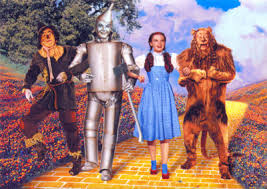
One of Tom Romano's student's project I looked at was "The Wonderful Wizard of Oz: A Trip Down the Yellow Brick Road." It is about the main character that played Dorothy, and how the idea of the movie came to be and how they made it. There are exactly twenty-five genres in this project; most of them are poems, and dialogues, but other than that there are formal letters, and an accident report. They are quite effective because it helps relate all of the genres together to fit the main topic. Through dialogues, words can be spoken between characters and the director.

Each genre has its own research because it includes historical information from the character that played Dorothy and the events that took  place while making the film. Some of the poems are purely out of the author's artistic license or imagination because the author did not include any actual facts. You can tell especially from the two voices poem that the student puts lots of effort and creativity in the poem. The author transition between pieces by doing one genre over the film and then the next on the main character. The transitions are effective because it went back and forth between the topics and it made it interesting to see what type of genre that author has planned next.

Overall, I loved the author's style, voice and creativity. You can tell the student did research and made it fit perfectly well together, and not only that but the author created an incredible and memorable voice within the  project. I did learn some new information such as the types of poems that you can do as well as the power of the voice within the project; it definitely made it 10x better! The formatting, font, page layout, page elements, style, and appeal of the project reflects the style in the time period where the topic took place. After looking at the student's work, I want to create more genre with better creativity and voice.

Article 5 Response: The Secret to Being Memorable and Persuasive


For this week’s blog, I read an article named “The Secret To Being Memorable and Persuasive.” In this article, Joe Romm mentions many incredible ways to be remembered. The overall point of this article teaches readers how to be memorable and persuasive by using figures of speech to his or her advantage. Using figures of speech catch people’s attention and it makes the person using figures of speech stands out. It has been proven that it tends to stick in people’s brain because it can be catchy. Advertisement, songs, and famous sayings all have a catchy phrase and that phrase usually what helps it become memorable.

Here is an excerpt from the article:

Popular songs have a catchy “hook” or phrase that is repeated many times. Last summer’s monster hit ‘Call me maybe’ has one of the cleverest, hardest-to-get-out-of-your-head hooks you can squeeze into three words, ‘Call me maybe.’ The words ‘me’ and ‘maybe’ have both rhyme and alliteration.”

This excerpt is important because it is true that there are tons of songs on the radio or in movies that are catchy. I can relate to this because just recently I have listened to a song named, “Feel this moment,” and the beat, rhythm, and lyrics as well as the way the singer sings the song stays in my head for several days. It is so catchy, and the repetition and the rhymes of the lyrics made it quite memorable just like any other song.